Mostrando las entradas con la etiqueta peace corps. Mostrar todas las entradas

01 agosto 2006

Moving On

One would think that after 6 years of schooling in higher education institutions on three different continents one would be able to find a job. There are two things that haven't been the fun they were advertised to be: job hunting and apartment hunting.

I've never picked up a newspaper with a red marker in hand and sat there scanning the ads in hopes of a job printed on the page jumping out at me as if to say, "This job was made for you! Apply! Apply!". I refuse to work in retail or hospitality, perhaps I'm being to picky, but I feel like I'd have to dumb down my achievements to even get considered for one of those jobs. Many jobs advertised in the newspaper request that you sent in a covering letter and resume to the provided address. I didn't even know that was still an option these days. I though Career Builder and Monster.com were the leaders in job hunting this

All of the jobs I've applied to and been hired for have been found online and I'll continue on that route, actually. I find it to be a waste of paper, time and effort to send in a covering letter and resume to every job you think MIGHT be a fit for you. Applying to jobs onlines streamlines the whole process. I've applied to 10 jobs today so far: 6 ESL instructor jobs in Boston and 1 in Providence, 1 reserach associate position and 3 administrative positions.

I've gotten three responses so far: 1 called me in for an interview tomorrow, the data-entry position turned out to be a working-from-home scam and one of the ESL instructor positions responded with an automated response of "if your resume suits our needs, we'll contact you with in two weeks". That means never.

My interview tomorrow is for an administrative position at an event marketing company nearby and it sounds really promising. It really sounds too good to be true, but I'll believe it until they say, "actually, what you'll be doing is going door-to-door with this box of lime-green brochures in your hand wearing this festive hat".

We'll see.

29 julio 2006

Lesson #2: The Chambre on Why We Really ETed

As I sit here enjoying the aircon at the in-laws I can't help but feel like a failure. How is it possible for one to feel like while one has made the right choice, but at the same time not be able to deny the feelings of failure seeping out of one's pores? Perhaps that's a rhetorical question best left unanswered.

Yes, Peace Corps is hard. Yes, I had days where I hated El Salvador and could only think about being in Australia. Yes, I even felt depressed because I knew that I would not be able to return to Australia. Yes, I had plenty of great experiences. And yes, our time with Peace Corps/El Salvador was brief. However, none of these reasons have to do with why we ETed one week short of site placement or three weeks before the end of training.

The brutally honest reason is that we found an alternative way to live and work abroad for longer: Migrate to Australia!

We could have stayed in El Salvador for a year and then decided to migrate to Australia, however we decided that to be fair to both ourselves and our future community and counterparts, ETing before they had found a permanent community for us, which is next week, seemed like the most responsible choice. Everyone wins, our future community won't miss us or think poorly of Peace Corps and Peace Corps staff wouldn't have used their time in vain.

Peace Corps will be an opportunity that will be available to us later down the road, however, the chance to migrate to Australia most likely will not due to many reasons, of which age and lack of directly applicable work experience are two.

You might be thinking, "How can you spend a year working on an application process, get there and then just leave?". That's exactly what I said. But it's only until you get there that you can figure out whether Peace Corps really fits into your life plan or it doesn't. And for us, right now, it doesn't.

So fellow readers, during the next week this blog will be undergoing some changes to accommodate the witty documentation of our next adventure: migrating to Australia

Best,
Adrianna the rogue ex-Peace Corps volunteer

26 julio 2006

Lesson #1: Expect the Unexpected

The past 7 days have been a whirlwind of emotions - both positive and negative. As of July 27 Will and I will become RPCTs, also known as Returned Peace Corps Trainees. That acronym doesn't exist in the Peace Corps glossary, I just made it up because better than labeling yourself as an ETer (a volunteer or trainee who chooses an early termination of their service). I remember saying that I would not be one of those ETers, I wouldn't be one of those statistics, "I just spent a whole year trying to get through this application process! There's no way I'm backing out now!". That was until we knew that we actually KNEW there was an alternative way to live abroad. Our two years in Peace Corps were probably going to be our last two years living abroad for a while and we were going to go out in style!

I'm sure everyone is interested in knowing why we we're now labeled as "the volunteers that couldn't", so here's the story...

As many of the loyal readers of this blog may (or may not) know, before Peace Corps/El Salvador we were post graduate students in Australia. In late 2004 we bought a one way ticket to Australia with the intention of staying there after our studies. As our studies were drawing to a close we didn't see how there would be any way that we could extend our stay with the resources we were able to access at that time. We both wanted to continue working and living abroad and Peace Corps seems like the perfect way to continue doing that, and do some really good work for the global community along the way.

Everyone in my training group will agree with me on the absolute fact that Peace Corps is hard work for several reasons and you WILL and DO have days where you simply don't want to be there and can barely remember what possessed you to apply to Peace Corps in the first place. On one of those such days, instead of just complaining about the millions of flesh eating mosquito's that attack you when you visit the spider infested bathroom, we tried to be constructive about the situation. "What can we do to make ourselves feel better and feel like we can do this?". I knew that once we moved to our sites everything would turn out just fine because we'd have control over our lives again and wouldn't have to eat beans for the third meal in a row or rice with dead ants in it if we didn't feel like it.

If your plan was to live abroad while achieving the most stable life-style possible and you had the option of living abroad for 2 years earning $265 or 5-10 years earning $1,500+ per month, where in both options you'd be doing something you enjoyed...What would you choose?

Stay tuned for Lesson #2: The Juicy Bits: Why We Really ETed

12 julio 2006

A Reflection on the Life of a Peace Corps Trainee in El Salvador: Month 1


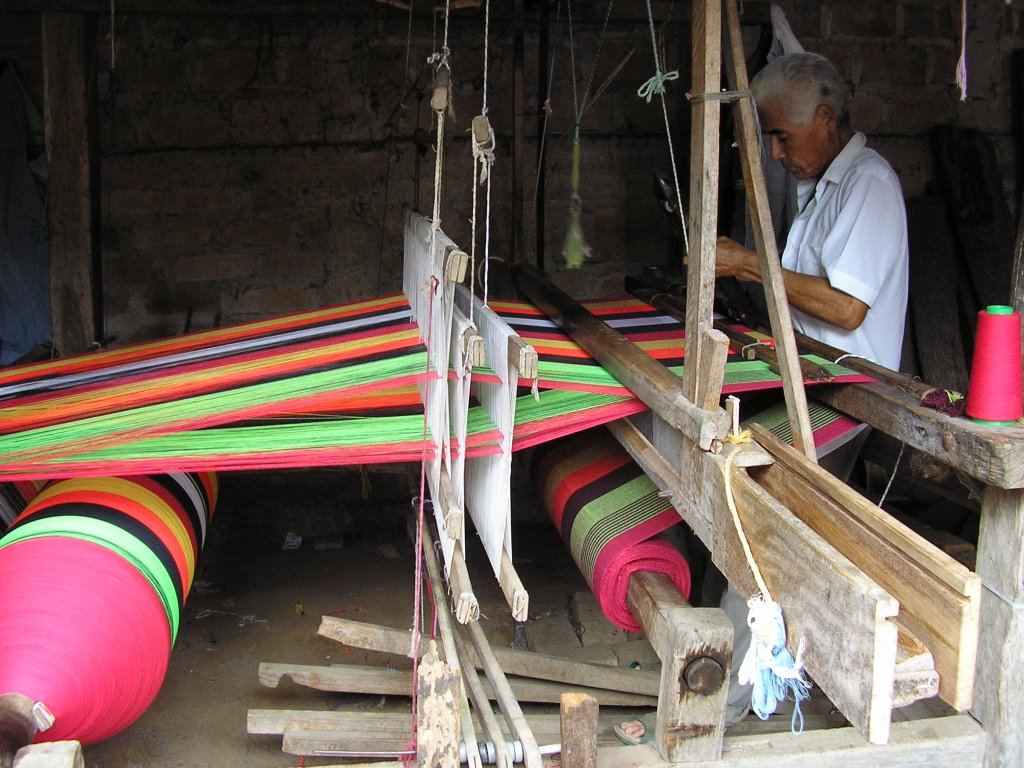
Man weaving manteles (table cloths) in San Esteban, a town once known for its bustling textile industry near my town of San Rafael Cedros.


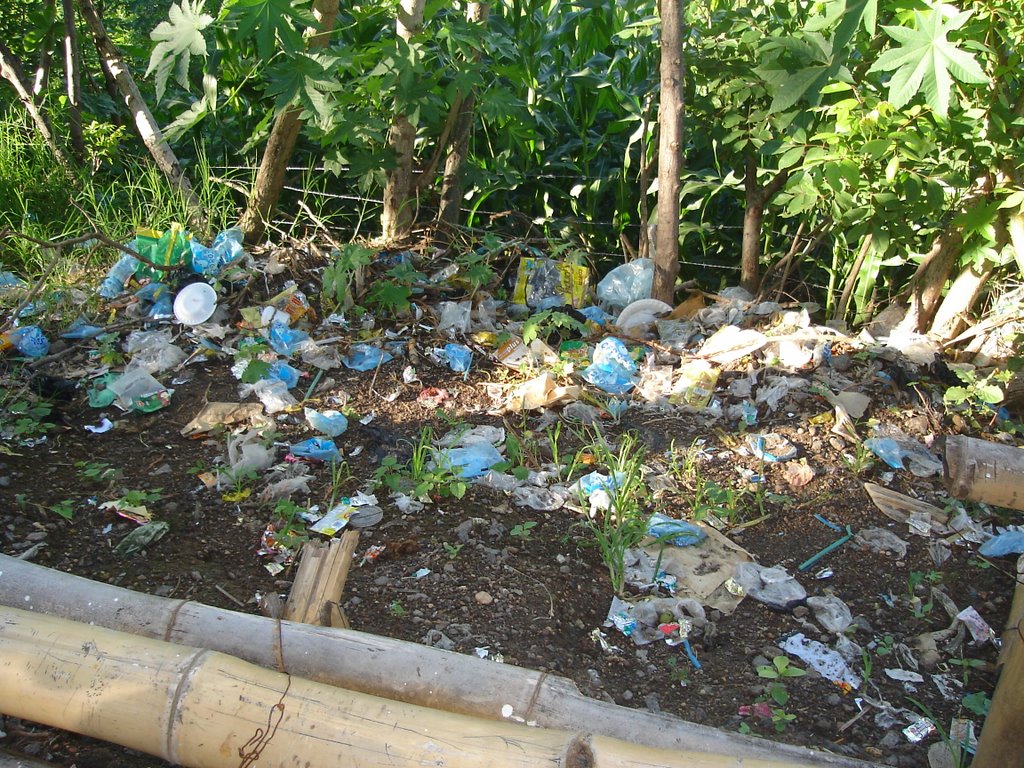
The ground immediately behind my bus stop where I take the bus 3 times a week to the training centre in San Rafael.

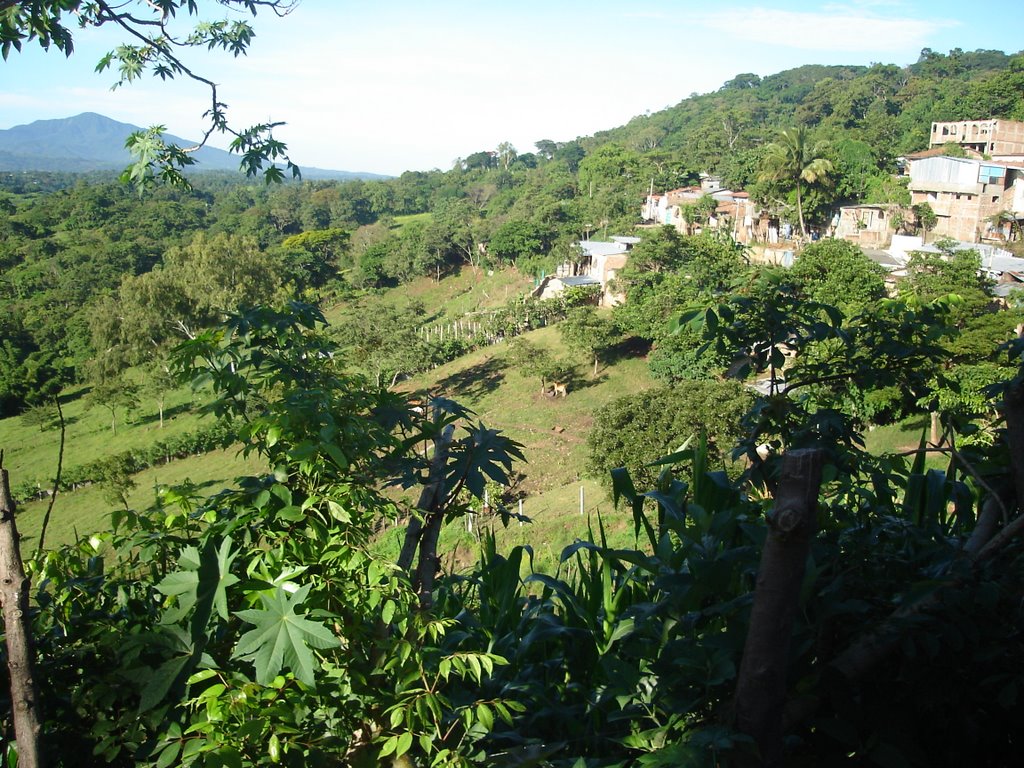
The view from the same bus stop when one overlooks the rubbish at one's feet.

Having reached the 1-month mark in our new lives as Peace Corps trainees in El Salvador, I think it's time for some reflection.

I'll be honest, my immersion weekend experience -dirty campo, volunteer town and capital- affected me greatly. I'm still trying to figure out what exactly happened to me and why I am having days where I can't be bothered eating another dinner of rice and beans so I over eat at lunch, so as to avoid dinner OR days where my Aralen dream world is looking much more attractive than getting out of bed and experiencing real life. I'm learning what I'm really made of out here, I guess that's what I wanted.

El Salvador, I feel, is a country of extremes. The landscape is some of the prettiest I've seen in my few years of life, yet Salvadorans litter like it's their full-time job without the pena they often exhibit during other activities. You can go to the capital and visit the richest neighbourhoods without a pupusa stand in sight and then take a short bus ride and see buildings so deteriorated they should be condemned with tired street vendors out front trying to make a living. Being that El Salvador is one of the poorest countries in Central America, the amount of new and shiny shopping centres one can find dotted around the country's capital department would make one think otherwise. You have people living in mud brick houses with dirt floors yapping on their cellphones while they walk down the dusty unpaved roads of their countryside villages.

I never expected to have that strange feeling of uneasiness, of uncomfort that seems to be eating away at my insides bit my bit - some days faster than others. Even though I've never classified myself as American, everyone else here has. I've been stripped of my own Latino heritage because I was born in America and lumped into the gringo category. No one expects me to speak or understand Spanish, so not only do they stare at me anywhere I go and watch everything that I do, they many times whisper behind cupped hands saying only God knows what.

I know it's out of curiosity that they want to stare at the frizzy-haired morenita (dark-skinned girl) as she walks down the street, but sometimes the eyes I see out of the corner of my eye staring at me so hard and so shamelessly actually bother me. Once you stare right back at them, they usually turn away. But sometimes...the eyes make their way back to staring at the morenita with the shameless curiosity of a child.

My father recently said to me that if we didn't have the downs that many times accomany the ups, then we wouldn't be normal and vice versa. Well, the ups better be coming soon!

07 julio 2006

Charlas, Pena & Confianza

Useful vocabulary for the most out of one's daily/weekly dose of The New Chronicles: In Search of Something Other
una charla: a presentation
la pena: embarrassment or shyness
la confianza: trust or confidence


Peace Corps/El Salvador is BIG on their charlas. Along with the words confianza and pena, it has to be one of the most-often used words in the Spanish language at the training centre. Today was the big day for many of us, as we had to give a charla at the local school in our community - in Spanish, on topics ranging from HIV/AIDS to Self-Esteem. It is still unclear what the purpose of this activity is and how it will prepare us for the REAL life of a Peace Corps volunteer, but it was an activity that one was obligated to participate in, lest one be afflicted with ameobas or other gastro-intestinal parasites and was physically unable to share information with youngsters in a crowded, noisy, hot school.

Public speaking, to be frank, is my downfall. I don't like to be recognized for my individual acheivements, I don't care for being the centre of attention and I certainly don't like being singled out. My identity lies with the identity of a certain group. Many times I'm the most "different" person in the group, but I'm not individually recognized for my acheivements because it's an group effort. Having everyone's eyes on me waiting for me to fill their minds with priceless information, as if I possessed the words that would enlighten them, makes me very, very nervous. No matter how much I prepare for a presentation I get nervous and the filing cabinets in my mind begin to fly open and the documents archived in them begin to spontaneously combust, leaving me with nothing but a few random words to work with.

I was dreading this charla I had to do on "How to Plan My Life" to a class of 9th graders. I had little time to prepare for it, as yesterday I had to prepare for a workshop I'm participating in this weekend called Trainging of Trainers (ESL teachers) and an unexpected trip to the capital to take care of a medical situation that was threatening me with medical separation. This morning my mind was racing with ideas on what I could do to get out of having to give the presentation to a bunch of 9th grades who probably won't remember anything I said.

I had no choice. I had to do it. I went in there, sweating like an animal, my heart practically beating out of my chest and gave my presentation like the rock star I've never been.

I tried to act as animated as possible, while waving my arms about and sauntering around the class room like I knew all the answers, imitating the behaviour all of my previous teachers and professors have exhibited in their classes. In my head I kept repeating, "I have no idea what I'm doing, but I'll just pretend like I do". I exuded fear and nervousness masked with confidence. Apparently the arm waving and the sauntering (not to mention my non-accented Spanish) helped because I was able to keep everyone's attention all the way until the end.

I discovered something about myself today: I am capable of teaching or presenting information to others, if and only when I know what I'm talking about.

04 julio 2006

Where in the campo are Adrianna & Will?

This past weekend we experienced what is called Immersion Weekend. What is it? Well, in few words it's basically where trainees are sent to live in a cantón (a rural village of sorts) for two days for the following reasons:

* to use Spanish exclusively for 2 days
* to experience Salvadoran rural life where little contact with foreigners has taken place
* to feel the 'aloneness' of being a Peace Corps volunteer
* to get to know more parts of the country and the transport system

I'll be honest, I don't have anything positive to say about my experience. I was sent to Managuara, a small village on the outskirts of the pueblo Sesori in the department of San Miguel. I didn't bring my camera along due to security issues and wanting to maintain my level of humildez or humility. I didn't shower for two days and my meals consisted of 50% biscuits (cookies) and 50% of the saltiest beans on the planet and rice.

When the mayor of Sesori was driving me out to Managuara in his air-conditioned pick-up I found myself holding back uproarious laughter and heart-wrenching tears as I gazed out the window at the endless vista of green rolling hills. When the alcalde stopped his pick-up on the dirt road we has stopped at the entrance new home for the next two days: a crumbling mud brick house with a dirt floor. Almost immediately the man of the house apologized for his near poverty level life-style. No apologies needed, I replied.

The family consisted of 9 kids and the parents. One child was one the way, as it was still being carried in the mother's belly, 1 lived with the grandparents and two were unaccounted for for the time I was there. The youngest child didn't wear clothing and spent the majority of his day crying and having hissy fits that entailed rolling around in the dirt. Due to the fact that campo Spanish differs from standard Spanish (read: basically incomprehensible even to native speakers), goal number 1 listed above was not met. I spent my two days there reading in a hammock and having the children stare at me and whisper amongst themselves. The mother and I ran out of conversation after I said that I didn't have any children of my own and was not planning on having any soon. Periodically she would pull up a chair to where I was and just stare at me. By the end of the second day I was so starved for conversation in ANY language that I began talking to myself in my journal. I finished reading a book in 1.5 days and began to read it again due to the lack of conversation and the stifling heat that prevented one from moving about.

For some reason or another there wasn't any electricity and for another reason altogether the father used 90% of the family's water supply for work purposes. The water remainingin the pila was covered with a slick film of some sort of unidentified substance, which prevented me from wanting to shower with it. The main reason I didn't shower was that I'm not one for showering al fresco in front of construction workers or strangers in a puddle of mud - the same puddle of mud that the family's pigs bathe in. A latrine was also absent from the property, as their garden was their toilet. The world was their rubbish bin and their garden was their toilet. The few times I went to go do my business I was followed by a gang of pigs who waited for me in the bushes until I was done so that they could rush in for the "gold". This is the same gang of pigs that would hang out inside the family's house and rummage through the kitchen. There was no separation between inside and outside and the family practically lived and slept with their chickens, pigs and dogs.

The last things I'll say is that while the family did not have running water or electricity, they did have a television and a cell phone. Basic hygiene and proper food handling procedures were absent in the household.

I didn't enjoy my experience, nor will I say it will be a highlight of my experience here. I will, however, say that it's unacceptable that people should have to live in such poverty. At the same time, yesterday I questioned my reasons for coming here.

How is living this way going to help anyone's standard of living? It won't, but it will make you appreciate what you had and what you will have when your time in Peace Corps is over.

25 junio 2006

The Life in "El Sal": Photos


Our site mates from San Rafael de Cedros whom we have Spanish class with in our community: (from left to right) Will, Adrianna, Barbara, Samuel


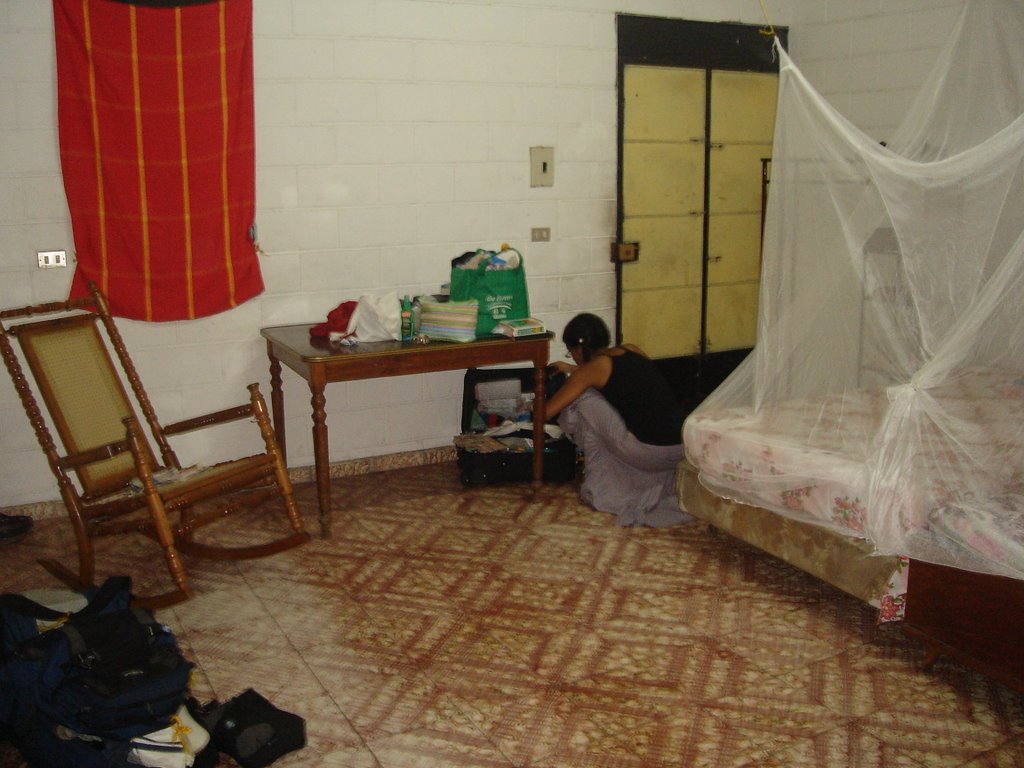
Our room for the next 8 weeks in San Rafael at our host family's house. The mosquito net protects us from the flesh eating mosquitos and the giant roaches, as well as the family pets.


The Courtyard Garden at our host family's house in San Rafael Cedros


The countryside of San Fransisco, a canton (rural town/village) where we visited an agroforestry volunteer at during a guided PCV Site Visit. The purpose of such visits is to see how other volunteers live their daily lives.

For more photos on our experience in El Salvador thus far, go to:

http://www.flickr.com/photos/will_and_adrianna/sets/72157594176125864/

24 junio 2006

"Why is your hair different?"

Yesterday we were whisked off to a canton (tiny country-side town/village) blessed with the same San Francisco to visit an agroforestry volunteer and to get a feel for daily life out there. The day started out with hunger pangs and a dusty ride out to the canton full of lush, rollling green hills. We were greeted by a volunteer named Melissa (I think) coming down a dirt path. We followed here down the path she had come and down a little slope which took us to a little housing compound. Our first activity of the day was to make bread in a clay oven - a product of the previous volunteer. We got our hands dirty making Budín de Guineo, which is essentially a very, very rich banana bread. The ingredients included heaps of sugar, heaps of butter and lard amongst others. As we cracked the eggs that were to be added to the batter, which was mixed by hand rustic style, we chucked the egg shells over the fence and into the grassy area Salvadoran style. It's very normal to chuck your rubbish anywhere you wish in this culture. When the batter was ready it was poured into latas or baking trays and pushed into the clay dome. The finished product was the most delicious banana bread I've ever tasted for two reasons: I was ravenously hungry due to only eating a piece of bread at 7am and it had generous amounts of butter, sugar and bananas. The rest of the day was downhill because I ate so much banana bread I couldn't think properly. Photos coming soon!

Today I visited my first orphanage. I'll admit it. I'm not a big fan of kids. That might seem contradictory seeing that I'm a youth development volunteer. However, these kids were great! I've never twisted so many pony tails, had so many kids who wanted me to hold their hands and braid their hair in my life! "Why is your hair different?" "What is America like? Can you take me?". We played Duck, Duck, Goose and Simon Says. By the end of the 2 hours I had girls sitting on my lap and holding my hands. One girl had grown quite attached to me and when it was time for us to depart, she walked me over to our van and didn't want to let go of my hand. She began to cry and it just broke my heart. I told her not to be sad because I'd be back next week with candies and we could play more games. She agreed to the plan and moped away. Poor thing!

I've never been surrounded with so many kids without parents. The NGO we visited, ALDEA SOS, is a great alternative to your average orphanage. The kids seemed happy, the orphange was lovely and they all seemed healthy.

The image of that little girl holding my hand not wanting to let go of my hand will be etched in my mind forever.

22 junio 2006

A Day in the Life of an El Savlador/Peace Corps Trainee

Up until now I haven't really reflected on what exactly we do here to fill our days. I'll start with this: our days are chock-full of stuff.

I never thought that I'd be one of those "early to bed, early to rise" type of people, but apparently that's who I've become in these last two weeks. Our day usually starts around 5:45am-6:00am. We take our pila baths and are at the breakfast table at about 7am each morning. Then we either have Spanish class in our community or we travel to San Vicente for technical training at the training centre. Each community has about 3-4 volunteers, ours has four, and one of the houses is designated at the place where Spanish class will be held -which is our house. Advanced Spanish speakers don't participate in the classes, but instead are urged to go out into the community to get a taste of what being a volunteer is actually like. That entails making contacts in the community by visiting certain institutions and getting to know more about their inner workings. I'd just like to mention that being a native speaker doesn't any more easy to march into an institution and ask to speak to the person in charge or chat to strangers on the street.

Technical training consists of charlas or presentations given either by Peace Corps staff or current volunteers on certain topics ranging from Salvadoran history to how to put together a lesson plan for teaching life skills. Having current volunteers come in and talk about their experience and their projects puts everything into perspective and takes the fear out of you a bit - well for me anyways.

We usually have an hour or so for lunch, during which we all line up for the microwave to heat up whatever lunches our host families have prepared for us and then comparing notes, and sometimes sharing or trading.

We've also been getting vaccinations to protect us from all of the life-threatning diseases we can get here such as, but not limited to: hepatitis A, Typhoid, Rabies, Tetanus and Diptheria. Once a week we also take malaria medication. They say you have really vivid dreams and everyone was really worried about the side effects - I'll be honest, the dreams are cool.

We end Spanish class or technical training between 4:30pm and 5:00pm then find our community buddies and bus it back to our pueblos American school bus style.

Dinner is at 6:30. We chat for half hour or so. We're in bed by 7:45pm - 8:00pm. Sleep and repeat.

20 junio 2006

The "Just Do It" Approach

I used to be a big fan of all things Nike, but then I found myself unable to afford such products and didn't care for providing free advertising by having the logo plastered on everything I owned. Nike's promo tag, "Just Do It", on the other hand has proved useful for adjusting to life here in El Salvador.

1. Cold pila baths are rough in the morning and I usually try to acclimate my body little by little to the cold water I'm pouring over myself by doing one leg, then the other and then one arm and then the second one. The "Just Do It" approach involves holding my breath, squating and pouring one guacal (little bucket or tub) or freezing cold water over my back. Holding my breath keeps me from feeling like I'm about to have a heart attack.

2. Being somewhat of a spend-2-hours-in-the-kitchen-and-create-something-new-and-tasty afficionado, the lack of variety in the Salvadoran diet is something that is stretching my last nerve. My new approach: pupusas again for the third meal in a row? Just eat 'em. Beans and rice for the 3 day in a row? Suck it up and eat 'em. I'm getting accustomed to having the fun sucked out of things that I once enjoyed.

3. There are heaps of bugs here in El Salvador and I think about 78% of the country's population of flies lives in our host family's kitchen. Flies on your bread? Flies on your head? Just swat 'em. Just do it (lest you want to acquire som sort of fly-bourne stomach illness).

4. The pets here are apparently not house-trained. The pee and poo wherever they please. Sometimes they pee on our bedroom door. Sometimes they poo on the path that takes you to the toilet area. Just cover the pee with newspaper and jump over the poo.

5. The flesh-eating mosquitos are sometimes difficult to put up with, even with repellent, even with long sleeves on. Just slop on the repellent and slop on the anti-itch cream. Just slop it.

Just eat it. Just swat it. Just do it.

19 junio 2006

San Salvador: Our Saviour?

San Savlador, the capital of El Salvador, wasn't as hectic as we had imagined. I had imagined feeling as overwhelmed as we did each time we had to spend time in Bangkok. The city experience was actually one that was welcomed! We were not permitted to travel to the capital before our guided tour, which included going to Metrocentro (one of San Salvador's most popular malls) and the Peace Corps office where we are to go in case of illness, administrative needs, workshops, etc. We were shown which buses to take to get to certain places and where the ritziest place in town was. Forget about travelling in airconditioned luxury in comfortable seats while you gaze out the window at the poor people who have to walk out in the heat. Travelling in buses here in El Salvador is a process that requires you to be alert about the whereabouts of your belongings, when your stop is and if you have to stand (which is 90% of the time), being alert so you don't fall down. It's almost like an amusement park when the attraction is trying to stay alive while speeding around an old American-style school bus. No airconditionin, comfortable seat, no organized way of collecting bus fare and definately not the safest way to travel.

When we were at the Peace Corps office I loaded up on the free Newsweeks that Peace Corps volunteers get for free, reading books and an appetite for something other than the tamales I'd been eating for the past three meals. I've never enjoyed eating out or going to a shopping centre as much as I did today. Even though I didn't get to go shopping per sae we did pick up some essetials: a mirror (because there isn't a single one in the entire compound) and a surge protector (because Salvadoran electricity will fry your appliances without warning).

The bus terminals in San Salvador have to be one of the shadiest places on the planet. Complete caos. Complete shadiness.

17 junio 2006

Pueblo Life: The Tiendas

We’ve been in El Salvador for 1 week exactly. Why does it feel like we’ve been here for ages when we only left our life in Australia 2 weeks ago? I’m closer to my family than I’ve been in years, but somehow I feel the furthest away from them than I ever have. I must be going through City Life Withdrawal Syndrome. I must admit the pueblo life seems quaint for the time being. To get your bread you go to the panaderia or bakery. However, if you should need to find napkins, bath soap or milk you don’t head over to the supermarket because there isn’t one. Many families here in San Rafael have little tiendas or shops that are part of their houses. Some own chemists where you can get your prescription filled, some own librerías where they sell school supplies and others own food shops where you can get packaged bread, biscuits, toilet paper and other items. The trick to pueblo living is knowing where to go to get what you need because they don’t have signs that say the name of the tienda. You can, however, guess where one might be by the collage of posters advertising a better life if you eat a certain brand of yogur or a speedy recovery from your gripe and it’s cold symptoms if you purchase some effervescent tables. I haven’t visited any of the tiendas in my town but I have gone to one of the panaderias to purchase a biscuit for .15 centavos.

The pueblo where the Peace Corps training centre is located, San Vicente, on the other hand is blessed with a supermarket called Supermercado de Todo where you begin to melt as soon as you step inside. It’s quite difficult to get excited over finding canned garbanzos to make hummus when kidney beans seem to be the only beans they eat in this country or finding powdered soymilk in various flavours when you thought you’d never see it again while you feel like a piece of bread in a toaster!

13 junio 2006

The Simple Life: Take this Paris and Nicole!

I must admit that our arrival in El Salvador was quite anticlimatic - for some while I had forgotten that I was only moving to Central America and not Sub-Saharan Africa. On the surface, El Salvador is much like the other Latin American countries I've lived in. Beneath the surface, however, is where the difference lies.

Will and I are currently living with a host family in a pueblo (small town) called San Rafael de Cedros in the department of Cuscatlán (kind of like a state in Australia or America). Our surrogate family for the next 10 weeks consists of three generations of family members: the parents, the children and the grandchildren. Plus an extra person here and there, and two cats and 4 dogs. It's much like a hostel without the goings and comings of travellers. The town is quaint, everything you would imgaine a small town in a developing country to be. We have running water some days, constant electricity (the power did go out once though), plenty of fruits and vegetables and plenty of mosquitos carrying malaria and dengue. They actually have cantinas here (small hole-in-the-wall "drinking establishments") where the bolos and huele pegas (town drunks and glue sniffers) hang out. There is a market where one can buy pirated CDs, local fruits and vegetables and sandals amongst other things. One can also find a post office, the mayor's office, many food stands, plenty of churches (El Salvador is very, very religious) and half-paved, half-cobble stoned roads. And of course, plenty of rubbish strewn all over, as the concept of the "proper" disposal of rubbish has yet to catch on here. Will and I went to a community softball game yesterday to watch our host aunt play. Well, Will played and I sat in the rain under my lime green umbrella attempting to write in my journal until the rain drops began washing my thoughts away. I've also gone to a reza (prayer group), thinking it was a social call. Religion is a big part of the culture here and unfortunately if I choose not to participate in such activities, Salvadoran life would just pass me by. "You're Catholic, right?" is a question that came up almost immediately after being introduced to my host family. If you're not Catholic or Protestant then you might as well get struck my lightening and get in over with.

The actual house we live in is large, yet basic. I guess my host family is more modern than others as she has a washing machine, internet and cable - none of which I have used. The house is fashioned around a central courtyard filled with an abundance of plants and such, plus two turtles and heaps and zancudos (mosquitos). At night I wash my face and brush my teeth over a little bucket of water. In the morning I take my pila bath (a bucket bath of sorts) in a little concrete room. I think the cold bucket baths will take the most getting used to, as the water basin where the water is taken from is, um, infested with little squiggly things, which I learnt today were mosquito larvae. Not so tasty. Yes, dengue and malaria are real threats here along with rabies, Thyphoid, Heptatitis and other exiting things. And no, we cannot drink the water unless we want to die in our sleep. We started taking our malaria medicine (called Aralen) last week. So fun! We sleep under a mosquito net and dream Aralen dreams.

The more I speak to Salvadorans the more I realise how LUCKY I am to have been born me. The reality of life here is tough. Many people can't even comprehend how I could even think of leaving my comfortable life and trade it for the life that the "other half" of the world lives. If I don't change any lives, if I don't save the world, at least I'll have more compassion for the rest of the global community. El Salvador isn't Africa, but it certainly isn't Melbourne or Los Angleles.

07 junio 2006

The Dirty Central: Ahem


So...staging is finally over. I won't say that it was entirely interesting, but come on. How interesting can is it ever when one is getting briefed about the policies and regulations of one's new employer? Hardly ever. The staging coordinators were quite helpful and good presenters. It took a particular fancy towards the APCD for Municipal Development - he was a brilliant speaker and I reckon he did a really good job of getting everyone motivated to take this next big step into the unknown. It's not Burkino Faso, but it's a different world enough because I nor Will have never been there.

Travelling to a developing country and spending 2 months in the second largest urban area is one thing, but living in the middle of "all the drama" is another thing. I hoping that my travels around southeast Asia really DID help prepare me for living in El Salvador. I'd never been to Asia before and even though I was going with Will I was freaking out once we had gotten off the plane and were being transported to the terminal on the shuttle. I've been to Latin America heaps of times. I've even lived there - for 7 years to be exact. But I lived either on a military base on in the posh expat neighbourhoods.

Today we were told that San Vicente, the town where the training centre is located, will either be a punch in the face or we'll ease into it. Apparently for someone coming from the Western developed world, the training town is dirty, stinky and ugly. And strewn with rubbish. Phnom Penh wasn't exactly smelling like flowers, beautiful and spotless. The poverty was really apparent there and there was rubbish strewn all over the country side. But, like I said, I spent a week in Cambodia. Not 27 months.

A punch in the face or easing into it. What'll it be? Either way, I welcome the challenge with a $20 bill the elastic of my skirt.

Our "last meal"? We went to a Siamese restaurant called Busara, I got a heaping plate of vegetables and tofu and Will got pad thai. Yum.

06 junio 2006

Chickpeas, whiplash and Washington DC

Well, the flight from Providence to Washington DC is hardly anything to talk about, as it was a mere 1.5 hours. I didn't expect to be able to update the blog so soon, but I'm sitting at the writting desk barely able to keep my eyes open after the longish meal at some Indian restaurant with out training group and using free internet at my laptop.

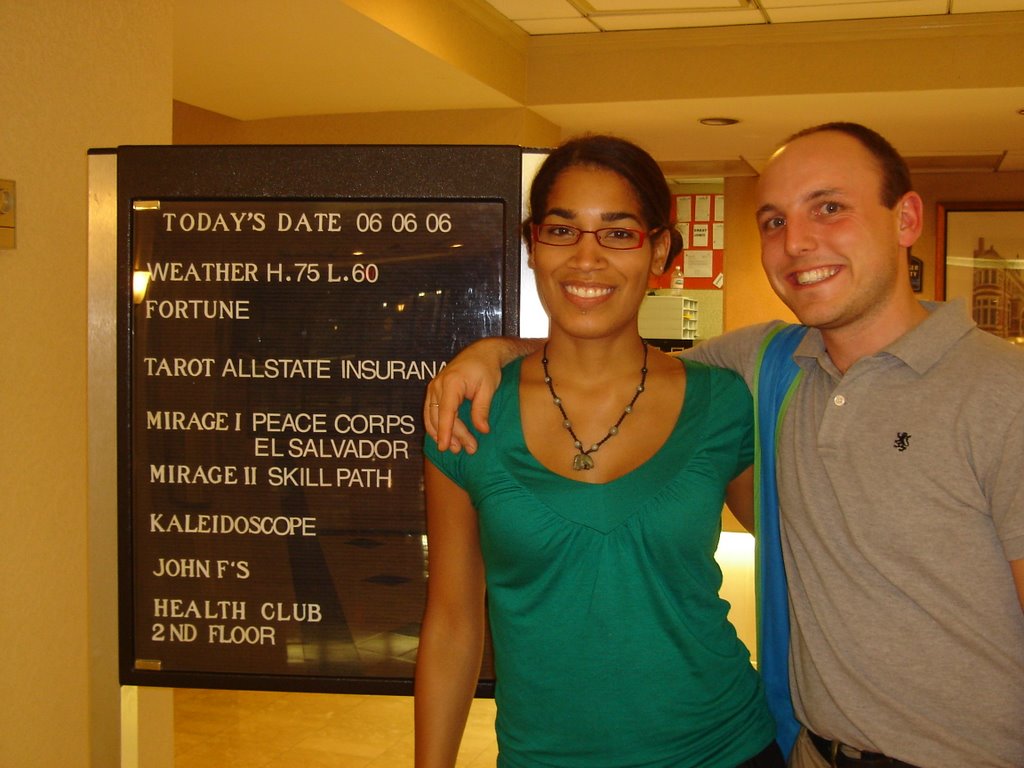
Staging officially began at 2pm and ran until 7pm. I won't bore myself with the details, but I will say that everyone I talked to seems really fascinating and friendly. The very first thing we did was play this "scavenger hunt" type game where we had to find a volunteer that fit the description on our sheet of "accomplishments" (ex: She has worked with at-risk children in Sri Lanka for 6 months). It was a good way to get talking to complete strangers!

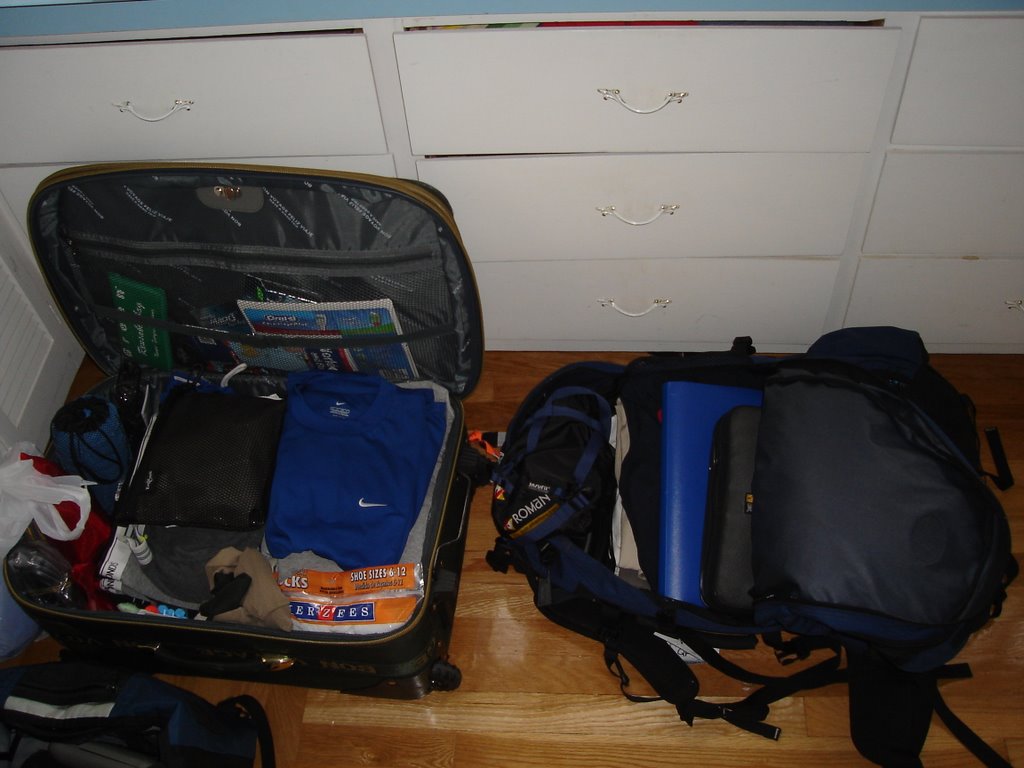
Our training group is composed of both Youth Development and Municipal Development, 2 married couples, heaps more girls than guys and heaps more Muni volunteers than YD volunteers. Our luggage consists of: two hiking packs, two small rolling suitcases, two messenger bags and two hand-carrying bags (both which are full of food stuffs). There is one girl who lives in Sydney, Australia, but is originally from Colorado.

I met one vegetarian and two others who had given up vegetarianism to join Peace Corps.

It's going to be really interesting to be able to look back on first impressions and see how we've all evolved as people by the end of two years. I wonder how all of this that we are about to experience will change us as individuals and us as a couple.

I must admit I'm not nervous or anxious at all. My biggest source of anxiety was coming from wondering what everyone would be like. Everyone seems lovely. Australia suddenly seems worlds away. Upon hearing that we've been living in Australia everyone asks how we found ourselves there. All I could muster up was a "fabulous".

I might not be nervous or anxious now, but I wonder what I will be thinking once we actually land in San Salvador and are piled on to a bus headed for 27 months of L.I.F.E. in a developing country where malaria medication will be taken with my breakfast, people believe in their religion and gender roles like it's their job and I won't be able to count on the "multiculturality" of the general population to blend in.

Hmmm. We'll see what I have to say when I take my first bucket bath.

05 junio 2006

The Great Hoopla of Packing

BEFORE


AFTER

Will's stuff - neatly packed
My stuff - well, the suitcase won't be bursting once I pack it properly

Tomorrow at 9am we head off to Washington DC meet the rest of our group and begin the adventure (or job) that is Peace Corps. Woo hoo! It's about time!